
Key Takeaways
Businesses in the Bay of Plenty are increasingly moving toward autonomous decision-making systems, shifting away from rigid scripts to agents that can handle real-time operational complexity. This guide explores the pillars of professional AI deployment for local organizations.
- Regional businesses require AI systems that mirror their unique data, language, and specific operational judgment calls.
- Agentic architecture relies on sophisticated workflows, memory systems, and clear model selection criteria to succeed.
- Integration with existing software stacks is essential for agents to move beyond simple tasks into reliable, end-to-end operation.
- Human-in-the-loop oversight is the foundation of trust, ensuring agents remain within bounds while scaling productivity.
- Long-term performance requires active partner management, including ongoing training, system updates, and regular capability reviews.
The AI agent landscape in Tauranga
Local business demand for automation
Business leaders locally are moving beyond basic software tools, seeking systems that can make context-aware decisions rather than just executing repetitive tasks. Companies are recognizing that current off-the-shelf software often lacks the nuances of local operational flows, leading to a surge in demand for bespoke development. NuggetAgent addresses this by creating agents that integrate directly into existing internal systems to handle complex, real-time decision-making. When businesses replace rigid scripts with intelligent agents, they reduce the manual load on staff while maintaining high standards for every customer interaction.
Why regional expertise matters
Regional nuances in trade and service industries shape how AI should perform, from the specific vocabulary used in client communication to the regulatory requirements of New Zealand operations. A developer who understands these local contexts will build software that survives in the real world rather than just in a testing environment. This requires deep exposure to local workflow habits and a commitment to building systems that reflect your specific business data. Relying on remote or generic AI configurations often leads to a disconnect between system output and organizational needs.
Integrating AI with existing NZ tech ecosystems
True operational efficiency comes from how well an agent interacts with your current software stack, whether that involves CRM platforms, cloud invoicing tools, or internal database systems. It is not just about the agent's intelligence; it is about its integration into the daily rhythm of the office. By focusing on AI Agent Services that map directly to your existing software, teams ensure that the technology supports their specific business processes. A properly integrated agent becomes a seamless teammate, pulling from your existing records to inform its next action.
Understanding the core architecture of AI agents
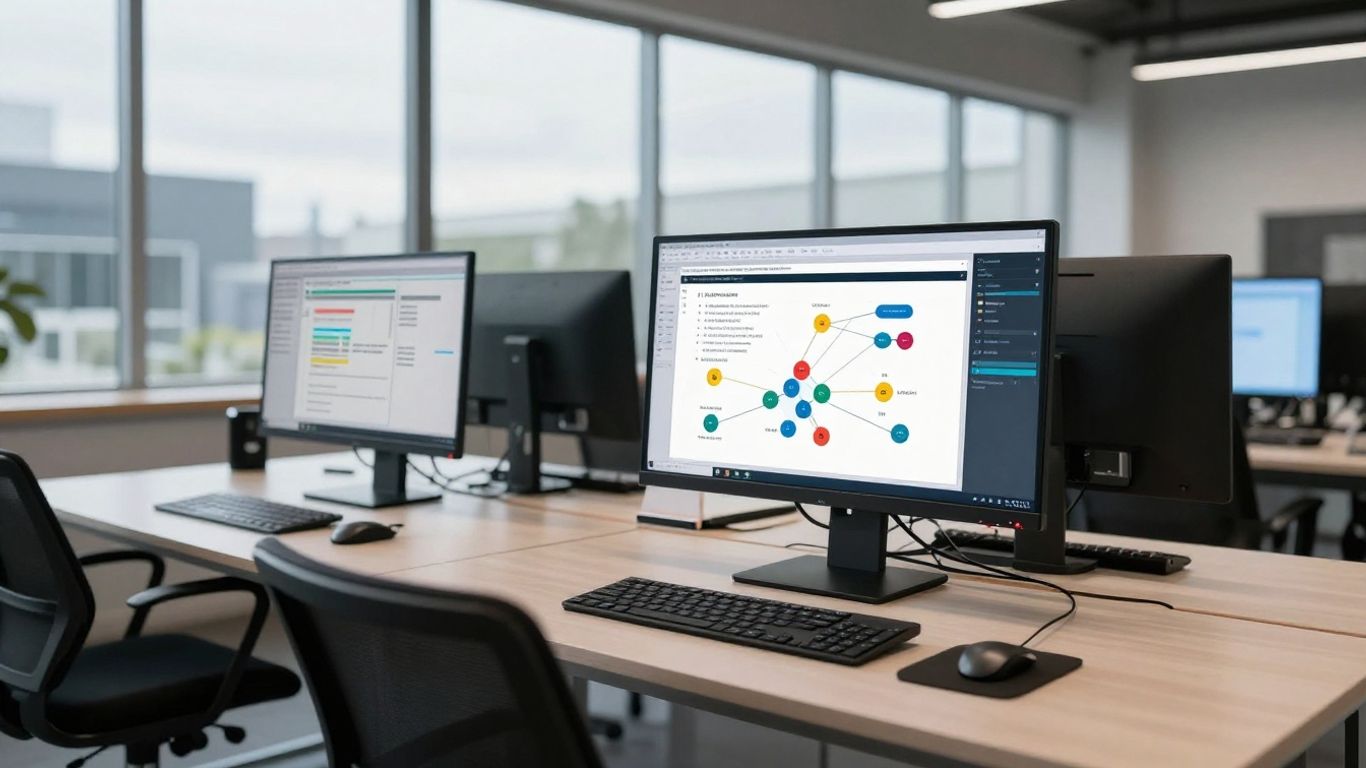
Defining agentic workflows and logic
Agent logic centers on the ability to interpret a scenario, consult business constraints, and determine the next logical step without human intervention. This process mimics the critical thinking of an experienced employee. The complexity of these workflows dictates how an agent handles ambiguity or edge cases, ensuring that even unplanned customer queries are managed with logic-based judgment rather than generic error messages. By identifying agent-shaped jobs through a structured audit, organizations can map out exactly where autonomous decision-making will provide the most impact.
Large Language Model selection criteria
Choosing a model requires balancing the need for complex reasoning against the technical requirements of low-latency performance within a specific industry context. A model must not only process information accurately but also align with the tone and operational constraints of the business it serves. Not every task requires the most powerful model; often, a smaller, highly efficient system trained on specific business data delivers more reliability and lower infrastructure costs. Achieving the right balance is a technical decision that should be driven by the specific demands of the task at hand.
Memory and context management strategies
Effective memory management ensures that an agent retains the critical history of a conversation or a project, allowing it to provide consistent service across separate interactions. Without a robust system to track context, agents risk becoming reactive, losing the thread of a multi-step project or a recurring client request. Maintaining a historical log of actions and data points allows the agent to recall specific preferences or previous decisions, which is vital for building trust in long-term client relationships.
Key technologies and stack decisions

Choosing between proprietary and open-source models
Selecting between proprietary models and open-source alternatives involves significant trade-offs regarding cost, control, and data privacy. Proprietary options offer rapid deployment and integrated support, while open-source models provide greater transparency and the freedom to host data where it best meets organizational compliance needs. The decision depends on where the business prioritizes its resources, whether that be in out-of-the-box performance or in the ability to audit and customize every layer of the system.
Frameworks for agent orchestration
Orchestration frameworks provide the infrastructure that manages how tasks, memory, and data flows connect to the agent’s core logic. Orchestration is essentially the nervous system of the agent, defining how it calls external tools, manages tool-call sequencing, and performs validation tests at every step of a transaction. A well-designed stack ensures that complex jobs are broken down into manageable sequence steps, which is why AI Agent Teams can outperform single, overloaded agents in complex, multi-stage business environments.
Security and data sovereignty in New Zealand
Operating within New Zealand requires strict adherence to data residency and security protocols, ensuring that sensitive information remains contained throughout its lifecycle. Protecting client data is not merely a legal requirement; it is a fundamental aspect of the technical stack’s reliability. Building security guardrails into the agent’s architecture allows businesses to innovate with AI while maintaining full confidence that their proprietary information and customer data remain protected.
Best practices for agent deployment
Designing human-in-the-loop oversight
Even the most sophisticated agents require a layer of professional oversight to handle exceptions that fall outside their programmed logic. This human-in-the-loop approach allows the business to retain total control while the agent handles standard operating tasks. Establishing clear triggers for when an agent should escalate to a human prevents errors and ensures that tricky situations receive the attention they deserve. The following table outlines how businesses typically categorize tasks for oversight:
| Task Type | Decision Authority | Human Role |
|---|---|---|
| Standard Inquiry | Agent (Autonomous) | Review Logs |
| Sensitive Data Change | Agent (Needs Approval) | Intervention |
| Novel Complex Case | Human (Referral) | Resolution |
Testing for hallucinations and edge cases
rigorous testing phase is critical to ensure that the agent remains grounded in real-world data and does not invent information to fill gaps. Teams should identify potential edge cases that cause confusion, such as poorly formatted input or highly irregular client requests. By stress-testing the agent against these scenarios before full deployment, developers ensure that the system maintains consistent operational judgment throughout its daily cycles.
Scaling agent performance for regional operations
Scaling an AI deployment is not about increasing the volume of messages, but about enhancing the complexity and reliability of the tasks the agent performs across different business units. As the team gains experience with Managed AI Agents, they can expand the agent's responsibilities to cover more departmental functions. This growth requires ongoing monitoring and technical support to keep performance metrics stable as the workload diversifies and becomes more integrated into regional operations.
Working with local AI development partners
Evaluating technical proficiency and portfolios
When vetting a partner, focus on their track record of deploying agents that move beyond static chatbot interfaces to actual, autonomous decision-making. A capable partner should be able to walk you through previous projects where their code solved a tangible operational bottleneck. Reviewing their portfolio ensures that their technical skills match the complexity of your business needs, as a partner must understand both the backend architecture and the user-facing side of the solution.
Clarifying intellectual property rights
Establishing ownership of the agent's logic, custom integrations, and data history is a vital step in any development contract. Because these agents are built specifically on your company's proprietary data and operational workflows, the resultant system should be an asset belonging to the business. Before starting, work with your partner to define how intellectual property is managed, ensuring that your long-term autonomy is backed by clear legal agreements.
Maintaining long-term agent maintenance and updates
Technology is not a set-and-forget proposition; agents need ongoing attention to stay sharp as your business processes evolve. A lasting partnership often involves several key commitments:
- Weekly reviews of conversation logs to identify performance gaps or missed opportunities.
- Regular updates to the agent’s internal knowledge base to reflect new products or services.
- Monthly strategy meetings to discuss how the agent influences current business goals.
- Yearly rebuilds to integrate the latest improvements in model reasoning and platform speed.
By following this maintenance cadence, a business ensures that its AI investment remains as effective on day three hundred as it was on day one.
Conclusion
Successfully implementing AI agent development Tauranga requires a shift in mindset from simple task automation to creating systems of record that make informed, real-time decisions. By prioritizing custom integration, human-in-the-loop design, and ongoing management, businesses can deploy technologies that truly function as reliable members of their team. Whether starting with a targeted assessment of internal workflows or scaling sophisticated multi-agent structures, the path to AI adoption is paved by clear business logic and a partnership approach that values operational reliability above all else.
Frequently Asked Questions
How is an AI agent different from a typical chatbot?
Unlike chatbots that focus on conversational turn-taking or scripted answers, an agent is designed to execute specific tasks based on logical reasoning. An agent can call internal software tools, access your business data, and make independent choices to solve a problem effectively.
What does a business need to provide to build a custom agent?
To build a useful agent, developers typically need access to existing documentation, clear definitions of your internal workflows, and documentation of how your team handles typical inquiries. The quality of these inputs directly impacts how well the agent mirrors your internal operational logic.
How does an agent handle complex or unusual customer enquiries?
Agents are programmed with decision trees and context-sensitive reasoning that allow them to handle many unique situations automatically. When a situation exceeds the agent's defined scope or logic, it is designed to hand the inquiry off to a human, ensuring complex cases never go unresolved.
How do you measure the success of an AI agent?
Success metrics typically include the percentage of tasks resolved without human intervention, the time saved on administrative duties, and the reliability of the system under peak usage. Businesses should track these KPIs monthly to determine if the agent is achieving its intended productivity goals.
Are AI agents secure for handling sensitive client data?
Security is a fundamental design requirement for professional agents, involving encrypted communication, strictly managed access protocols, and data residency considerations. When a system is built with a focus on compliance, it can manage and protect data with the same or greater reliability than manual digital processes.
How long does it usually take to train an agent?
Initial deployment depends on the complexity of the workflow to be automated and the quality of existing business documentation. Many operational solutions can be designed and tested within a few weeks, provided there is a clear understanding of the specific job the agent is intended to perform.
Can agents learn and adapt as business needs change?
Agents require regular maintenance and training updates to evolve alongside your business. Professional AI services allow for continuous monitoring, monthly tuning, and periodic retraining, which ensures the system adapts to new processes, customer language, and product offerings over time.