
Key Takeaways
Building intelligent systems requires a departure from rigid scripting to enable independent logic within your operations.
- Effective agents must be trained on your unique business context, not just generic models.
- Identify tasks that require judgment rather than simple repetitive execution for the highest return.
- Prioritise architectural guardrails to ensure output remains predictable and accurate.
- Managed service models are essential for maintaining performance through iterative feedback loops.
- Clear task decomposition allows independent agents to handle complex, multi-step workflows effectively.
Understanding the landscape of custom AI agent development
The move toward custom AI agent development signifies a fundamental shift in how businesses handle digital tasks. Instead of software that operates on static conditional paths, these systems leverage advanced reasoning to navigate ambiguity. By deploying agents designed to act on behalf of your team, you transition from managing digital tools to guiding autonomous execution. This approach relies on deep integration, ensuring the agent understands your specific operational language and objectives.
Defining autonomy in modern AI systems
True autonomy refers to the capacity of a system to perform multi-step tasks without constant human feedback. These agents analyse environmental data, access necessary tools, and iterate on their approach if the initial path fails. Unlike basic automations, autonomous systems maintain a state-based awareness of their workflows, allowing them to make nuanced decisions in real-time.
Distinguishing between chatbots and intelligent agents
Conventional chatbots function like digital encyclopaedias, primarily outputting information based on keyword triggers rather than interpreting intent. In contrast, an agent possesses the capacity for decision-making power for business processes, enabling it to act on that information independently. While a chatbot retrieves an answer, an intelligent agent completes the underlying task, such as updating a ledger or booking an appointment.
Key benefits of bespoke agent solutions
Bespoke solutions provide the advantage of being built on your proprietary data and internal workflows. They avoid the limitations of black-box models by aligning directly with your specific internal standards and service requirements. This level of customization creates a system that integrates as a functional member of your team rather than a detached software implementation.
Identifying business use cases for AI agents
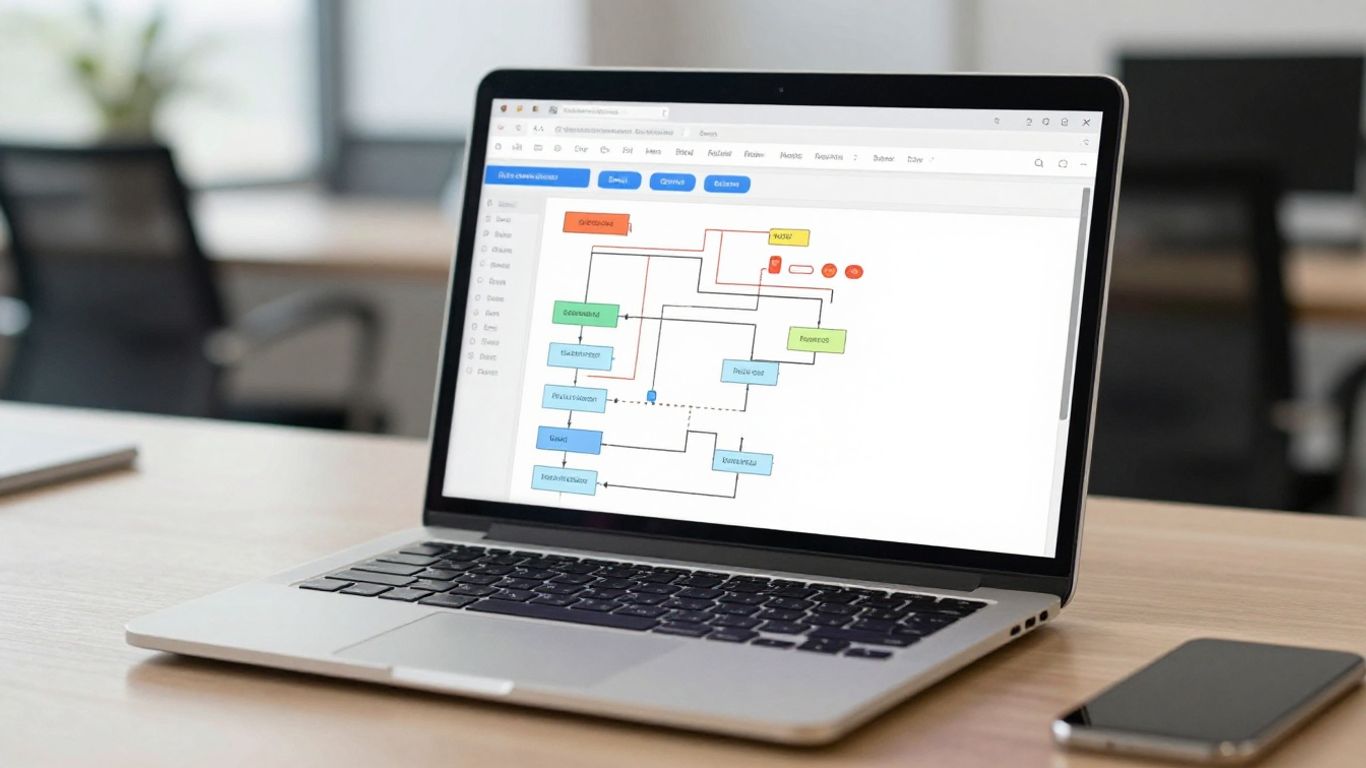
Finding the right starting point for deployment is the most critical hurdle for operational leaders. An audit of your daily responsibilities often reveals specific friction points where manual judgment is required but time is limited. Successful projects generally launch in areas with clear decision criteria but high volumes of incoming, unpredictable requests.
Automating complex customer service workflows
Customer service often involves tasks that fall outside standard linear scripts, such as resolving disputes or handling unique account inquiries. By implementing specialized agents that integrate with your communication channels, you ensure every enquiry is addressed thoroughly without overwhelming your core staff.
- Agents monitor incoming tickets to gauge urgency and sentiment.
- They access existing databases to provide context-aware, personalised responses.
- Handoff processes are triggered automatically for critical or multi-layer issues.
- Interaction transcripts are stored to continuously train the model on evolving customer needs.
After setting up these workflows, you gain the ability to provide instant, high-quality resolution at scale, regardless of the time of day.
Streamlining internal data analysis processes
Internal operations frequently suffer from data silos that prevent timely insights. Agents can cross-reference information stored in disparate systems to provide consolidated reports or actionable recommendations. This capability reduces the time your analysts spend pulling data, letting them focus on interpretation and strategy.
Enhancing decision-making for operations
Operational leaders often find themselves making repetitive judgment calls that consume significant focus time. NuggetAgent builds systems designed to handle these specific moments by applying the business's own logic to real-time events. By defining how your team values trade-offs, these agents ensure consistent decisions across your entire supply chain or project portfolio.
Evaluating technical feasibility and ROI
Before commit-level engineering begins, you must determine if the task is genuinely agent-shaped. High-value targets are those where the cost of human error is high but the logic for a "correct" choice can be articulated. Calculating ROI involves balancing the development effort against the total hours of manual effort the agent will eventually displace.
Selecting the right technology stack for AI agents
Choosing the foundation for your agent involves balancing accessibility with the need for deep, custom capabilities. Often, teams find that starting with a well-integrated framework allows for faster iteration than building from raw base models. The goal is to reach production-ready status without sacrificing the long-term flexibility your business requires.
Choosing between proprietary models and open-source alternatives
Proprietary models offer ease of access and high performance, but they may restrict your control over data. Open-source models, conversely, allow you to deploy within your own cloud infrastructure, satisfying internal security requirements. Balancing these often depends on the sensitivity of the data and the specific reasoning capabilities required for your workflows.
Assessing vector database requirements
Retrieval-Augmented Generation (RAG) is essential for ensuring your agent knows your specific business procedures. Vector databases act as the agent's long-term memory, allowing it to search through your proprietary archives for relevant context. Properly indexing this information allows the agent to deliver responses that are ground in actual business reality rather than general patterns.
Leveraging agent orchestration frameworks
Orchestration frameworks manage the complexity of multi-step workflows, handling tool calls and state management behind the scenes. Using a proven framework allows your developers to focus on the business logic rather than the plumbing of individual LLM interactions. This architectural choice significantly affects how quickly your system can be updated when processes change.
Considering low-code versus custom-coded infrastructure
Low-code platforms can be useful for initial prototyping, but they often struggle when integrated with highly specific legacy systems. Custom-coded infrastructure provides the control needed to build complex integrations that low-code tools might handle poorly. The right choice is ultimately determined by your available technical resources and the depth of complexity your workflows demand.
Designing the architecture and control logic

Designing the control logic requires moving beyond simple prompts toward formal frameworks that constrain the agent's behavior. An agent must understand not just what it can do, but explicitly what it cannot do. This structured approach to development ensures that the system works within the bounds of your business model.
Establishing guardrails for reliable output
Guardrails prevent the system from deviating from your operational standards. These act as a secondary filter, validating the agent's output against defined business rules before the final decision is executed. Implementing this layer is the most practical way to reduce the risk of erratic or non-compliant behavior in production.
Planning task decomposition strategies
Effective agents break down large, ambiguous goals into smaller, manageable sub-tasks. Using a structured table allows for clear mapping between these components and the required inputs.
| Task Phase | Primary Logic | Evaluation Metric |
|---|---|---|
| Intake | Context extraction | Completeness of data |
| Processing | Workflow route selection | Accuracy of sub-agent task |
| Final Result | Rule-based validation | Compliance with standards |
By ensuring each phase maps to a clear evaluation metric, you maintain visibility over the agent's work at every stage of the process.
Managing long-term memory and context windows
An agent's utility is defined by its memory, specifically its ability to recall past interactions and apply them to current tasks. Managing this involves careful storage of session history and relevant metadata. This allows the agent to maintain a high level of relevance throughout long-running tasks, ensuring it never loses sight of the user's initial objective.
Routing queries through specialized sub-agents
Instead of creating a single "super-agent" that attempts everything, design systems where a central agent routes specific query types to smaller, specialized modules. These sub-agents are much easier to test and update independently. This modularity ensures your entire system remains performant even as your workload grows more complex and diverse.
Implementing and integrating your AI agent
Deployment is the final bridge between theoretical design and operational utility. Proper implementation requires creating secure pathways for the agent to interface with your existing database structures and internal software. Successful integration means the agent should operate as a background professional that your team can rely upon without constant oversight.
Establishing secure API connections with legacy systems
Many businesses rely on long-standing infrastructure. Building secure API bridges allows your modern agent to communicate with these systems safely. This enables the agent to take actions—such as checking inventory levels or flagging customer issues—in your primary platforms automatically.
Testing agent performance in sandboxed environments
Before an agent makes real changes, it must pass through rigorous sandboxed testing. This involves running the agent against historical datasets to see if its decisions align with expected outcomes. This controlled environment allows you to refine the prompt engineering and logic without risking operational integrity.
Managing data privacy during external integrations
Treating external data with care is non-negotiable. Only integrate necessary endpoints, and ensure proper tokenisation is employed on any sensitive information accessed by the agent. Maintaining a clear audit log of what data was accessed and why is a core component of responsible agentic architecture.
Scaling agent capabilities based on usage metrics
Performance metrics provide the feedback needed to expand an agent's mandate. By tracking how often certain workflows lead to successful outcomes, you can identify where to allocate more compute or logic. Scaling should be incremental, ensuring that as you increase the agent's autonomy, you simultaneously bolster the guardrails overseeing it.
Security, compliance, and ongoing maintenance
Maintenance is not an afterthought; it is a critical component of institutional adoption. Building a system that remains static in a changing business environment creates long-term risk. You must establish routines for evaluating the agent's performance against your current operational reality.
Mitigating risks of prompt injection and hallucination
Prompt injection attacks exploit the underlying model's instructions. By isolating instructions from user input and using deterministic validation layers, you significantly reduce the risk of unexpected behavior. Regular "stress tests" on the prompt logic help identify potential vulnerabilities before they become critical issues.
Adhering to New Zealand data protection and privacy standards
Operating in New Zealand requires strict alignment with local privacy expectations. Designing your agents to handle PII data according to domestic standards is essential for maintaining consumer trust. This focus ensures that your innovation never comes at the cost of legal or professional compliance.
Monitoring real-time telemetry for performance shifts
Telemetry allows you to observe the agent's decision-making in real-time. If you notice a consistent drift in the quality of output, telemetry will alert you immediately. This visibility is necessary for ensuring the system maintains its utility as your business landscape shifts over time.
Scheduling iterative model updates and fine-tuning
Even a well-built system requires fine-tuning as your internal processes evolve. NuggetAgent emphasises that effective agents change as your business requirements change. By scheduling regular retraining intervals, you ensure your technology remains a direct reflection of your current, and not your past, business strategy.
Conclusion
Building custom AI agents that prioritize independent judgment over simple automation is the path forward for businesses wanting to scale effectively. By focusing on deep integration, logical guardrails, and ongoing management, you create a system that truly understands your operation and acts within your unique requirements. This is not about removing the human element, but rather providing your team with an autonomous partner capable of handling the decision-heavy tasks that slow down growth, enabling you to focus on strategy and high-level problem solving.
Frequently Asked Questions
How does an agent differ from a standard automation tool?
Standard automation tools follow rigid, pre-defined scripts that fail when unexpected variables appear. An agent is designed to use reasoning to evaluate the context of a situation, making independent decisions that handle deviations without needing manual intervention.
What makes an agent-shaped task?
An agent-shaped task involves repetitive, logical, and decision-making requirements where there is clear criteria for success. If a task requires handling messy inputs or judgement-based outputs that can be defined by business logic, it is likely a great candidate for an agent.
Can my business integrate these agents with existing legacy software?
Yes, provided you have the right architecture in place. Using secure API connections allows custom agents to communicate with your existing software stack, enabling the agent to read and take action within the systems your team already uses daily.
How do I ensure an agent does not make mistakes?
While no system is error-proof, guardrails are the primary method for maintaining reliable outcomes. By embedding strict validation rules and secondary checks into the agent's workflow, you can prevent the system from executing decisions that fall outside of your operational requirements.
What is the role of a vector database in an agent system?
A vector database acts as the long-term memory for your agent. It allows the system to store and search through your company's proprietary documents and historical data, so the agent can provide answers and make decisions that are informed by your specific business context.
Why is a managed service model important?
An agent's effectiveness is not static because your business processes change over time. Ongoing maintenance, including performance monitoring, weekly review of transcripts, and regular retraining, is required to ensure that the agent remains useful and accurate as your operational data evolves.
How long does it typically take to deploy an agent?
Timelines vary based on the complexity of your existing software and the nature of the workflow being automated. A thorough audit is usually the first objective step to identify the requirements, which informs the design and development trajectory towards a viable production deployment.