
Key Takeaways
- Autonomous decision-making software moves beyond rigid scripts to make independent judgement calls based on your specific business data.
- Real-time processing allows systems to handle critical tasks without waiting for manual human input.
- High-quality training datasets and feedback loops remain the fundamental pillars for accurate system performance.
- Implementing these technologies requires careful human-in-the-loop oversight to ensure operational reliability and auditability.
- Proper deployment focuses on integrating directly into existing workflows rather than relying on generic, off-the-shelf templates.
Understanding autonomous decision making software
Autonomous decision-making software represents a functional shift from basic task execution toward systems capable of exercising independent judgement. These programs do not simply follow a predefined checklist; instead, they ingest complex variables and use logic to determine the most effective path forward. By moving away from static scripting, businesses can address unpredictable scenarios with the same speed and consistency they apply to repeatable processes. For organizations seeking to bridge the gap between reactive reporting and active management, NuggetAgent designs and builds these systems based on your internal knowledge and logic.
Core components of autonomous systems
The foundation of any capable system lies in its ability to ingest data, reason through scenarios, and execute actions within set boundaries. These systems rely on clear rulesets, access to historical business data, and a continuous feedback loop that informs future decisions. Without these integrated components, a system cannot effectively discern when a manual intervention is required versus when it can proceed independently.
How software shifts from automation to autonomy
While traditional software relies on a linear "if-this-then-that" structure, autonomous systems introduce a layer of interpretation. The software evaluates the context of a new signal against past outcomes to decide the next move. This transition changes the operator from a manual executor to a steward of high-level strategy, allowing the software to manage the nuance of routine operational queries.
Distinguishing rule-based systems from adaptive AI
Rule-based systems are finite and break when confronted with outcomes outside their original programming. In contrast, adaptive AI models continuously improve by synthesizing new information. Understanding the limit of each is vital, as effective operational strategy often requires combining the predictable reliability of rules with the flexibility of adaptive models.
Key benefits of implementing autonomous workflows
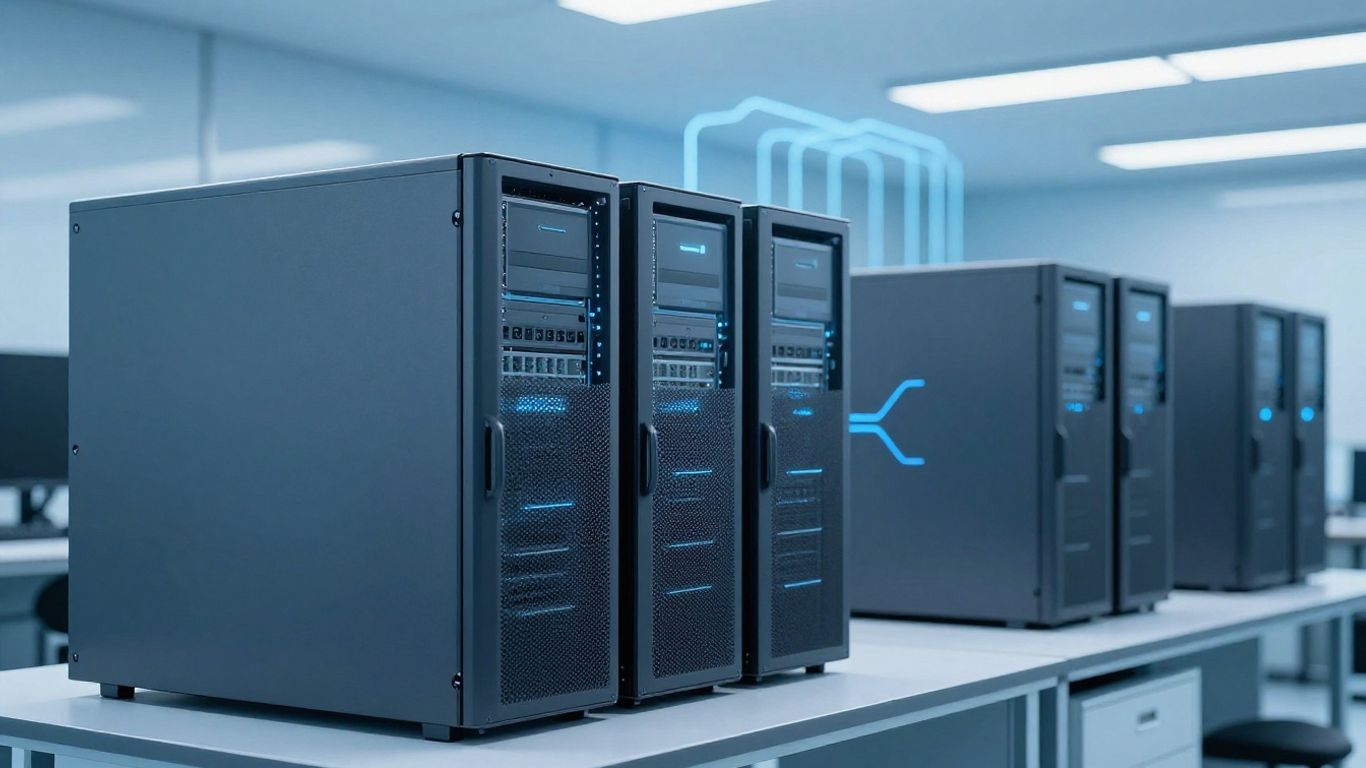
Deploying autonomous decision-making software changes how a team handles pressure by moving tasks into a system that never fatigues. By allowing the software to manage recurring complexities, personnel can focus on strategic improvements that require actual creativity rather than administrative overhead. Organizations that effectively leverage Agentic AI see significant gains in efficiency, as noted in the following list of core operational improvements:
- Improved response times for routine client enquiries and operational tickets.
- Consistent application of company policy across all digital touchpoints.
- Elimination of bottlenecks caused by waiting for human sign-offs on low-risk tasks.
- Seamless 24/7 coverage for customer interactions without staff burnout.
Reducing latency in critical operational decisions
Latency in decision-making often acts as an invisible tax on growth. When systems can evaluate streaming data to initiate an immediate response, the delay between a signal and an action is effectively removed. This speed is non-negotiable in environments where market conditions or client needs shift rapidly during off-hours.
Minimising human bias in high-stakes environments
Human judgement is prone to fatigue, emotional interference, and inconsistent application of standards. By standardizing decision criteria within a software system, you ensure that every case is evaluated with the same objective framework. This consistency is particularly valuable in high-stakes environments where every decision must align perfectly with existing regulatory or internal quality standards.
Increasing scalability for complex data processing
As data volumes grow, manual oversight eventually becomes a hard constraint that limits how many jobs a team can take on. Autonomous systems provide a solution by processing large streams of information concurrently, allowing for growth without a linear increase in manual labour costs. This allows your business to scale operations effectively while maintaining the same level of service quality.
Technical architecture and data requirements
Successful implementation of autonomous decision-making software depends entirely on the clarity and volume of your source data. The architecture must account for how the system accesses, cleans, and learns from these inputs to ensure the outputs remain useful. Without a clearly defined integration strategy, even the most sophisticated algorithms will struggle to produce results that align with your actual business processes.
The necessity of high-quality training datasets
A system is only as capable as the data feeding into its logic. Building effective tools requires training the models on your actual, historical business documents so the software understands your specific language and priorities. This prepares the system to act according to your unique operational standards rather than generic expectations.
Integrating real-time IoT and sensor feedback loops
Real-world autonomy often involves constant streams of sensor data that act as signals for the Real-Time Decisioning engine. By connecting these devices to the central logic, the system can trigger physical or digital changes instantly. This creates a tight, highly efficient loop where the system observes, thinks, and acts without requiring physical human presence at the site of the event.
Cloud versus edge computing considerations
The choice between processing data in the cloud or at the edge depends on your local needs for latency and connectivity. Generally, edge computing allows for rapid response times by keeping the computation close to the data source, whereas cloud platforms provide the massive storage and processing power needed for complex, long-term model training. Most businesses require a hybrid approach to strike a balance between high-speed reaction and deep analytical power.
Industries leading in autonomous software adoption
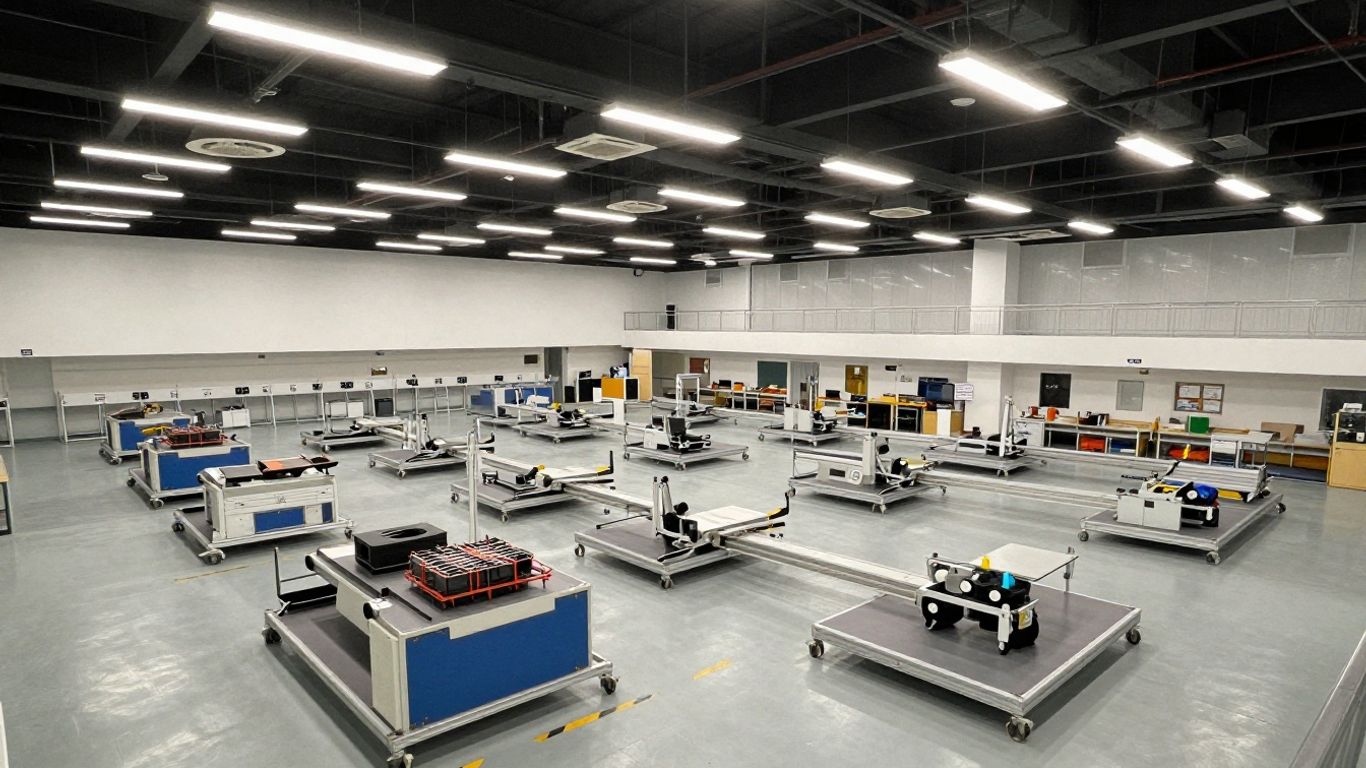
Industries dealing with high-frequency transactions or significant physical logistics have naturally led the movement toward autonomous adoption. The following table highlights common operational roles across these sectors and how independent decision-making improves the workflow:
| Industry | Primary Autonomous Task | Operational Impact |
|---|---|---|
| Financial Services | Risk assessment and trade execution | Faster market reactions |
| Logistics | Smart supply chain routing | Reduced shipping delays |
| Manufacturing | Predictive maintenance scheduling | Lower equipment downtime |
By leveraging Custom Agents that handle these domain-specific tasks, businesses remove the manual friction that otherwise slows down complex industrial operations.
Financial services and algorithmic trading
Financial markets move too quickly for human observation alone. Autonomous systems now monitor trade flow and execute orders based on strictly defined risk parameters. This ensures that assets are managed in accordance with specific strategies, effectively neutralizing time-based latency.
Logistics and smart supply chain management
Supply chains are prone to disruptions at every turn. Autonomous software allows for real-time recalculation of delivery routes and inventory levels based on current conditions in the field. This prevents significant downstream delays that a human coordinator might not identify until it is already too late to adjust the schedule.
Manufacturing and predictive maintenance
Maintenance is often managed reactively, which leads to costly unplanned downtime. Autonomous systems monitor equipment sensors to predict when a component is likely to fail before it actually breaks. This enables managers to schedule repairs during non-critical windows, maximizing overall production efficiency.
Challenges and ethical considerations
Every system transition introduces new risks that require careful management. Auditability is perhaps the most significant hurdle; when a system makes thousands of independent calls, showing why a specific decision was taken becomes essential. Businesses must focus on transparency and the ability to trace system logic to maintain trust with stakeholders and regulators.
Ensuring auditability and explainable AI (XAI)
Explainability means the ability for stakeholders to see the underlying reasoning path of an autonomous agent. When logic is opaque, errors are harder to correct, and the system loses its utility as a reliable business tool. Developing systems that provide clear logs of their decision-making process is an absolute requirement for long-term operational success.
Mitigating risks of model drift and hallucinations
Models can evolve over time, losing their accuracy or drifting away from their original goals if they are not monitored. This is why Agent Audits are part of a responsible deployment strategy. By establishing performance baselines, you can detect when the software begins to produce nonsensical or unintended outputs and reset its operational parameters before those issues impact customers.
Regulatory compliance in NZ markets
Local regulators have strict requirements regarding data privacy and the accountability of automated services. Compliance requires a deep understanding of standard practice in New Zealand and a commitment to keeping human oversight in the loop. The goal is not to remove humans entirely, but to provide them with the right tools to oversee the autonomous agents effectively.
Best practices for software selection and deployment
Deploying autonomous decision-making software is not a "set and forget" initiative. The most successful teams treat these systems as an extension of their workforce, requiring the same training, supervision, and updates as human employees. By following a clear, staged deployment strategy, you ensure the software remains an asset rather than a liability.
Assessing vendor interoperability with existing IT stacks
Software that cannot communicate with your current CRM, ERP, or inbox is of limited value. The best systems are integrated into your existing workflow layer, ensuring that incoming data flows seamlessly through the agent’s logic. Avoid tools that demand you rip out your functional infrastructure just to accommodate their specific architecture.
Developing internal human-in-the-loop oversight
Direct, hands-on oversight remains the best safety mechanism. Whether you are deploying AI Chat Agents or more complex logic systems, the human team must retain the final ability to review and override decisions. This creates a fail-safe that promotes trust while allowing the autonomy to perform well under normal operating conditions.
Setting benchmarks for system performance monitoring
Define clear metrics for what success looks like in the first 30, 60, and 90 days. Performance monitoring allows you to identify where the agent is excelling and where it may need manual re-training. These quantitative benchmarks provide the documentation needed for internal audits and help refine the system to perfectly mirror your core business goals.
Conclusion
Autonomous decision-making is no longer a futuristic concept but a practical necessity for teams operating at modern scales. By focusing on well-integrated, custom-built agents that reflect your unique business processes, you can reduce latency and eliminate the bias inherent in manual handling. The path forward for competitive businesses involves shifting to architectures that support real-time data ingestion while maintaining clear, human-led oversight and auditability to ensure long-term operational reliability.
Frequently Asked Questions
What defines an autonomous system?
An autonomous system is a software program capable of processing data and making independent judgement calls without requiring manual input for every step. It operates within predefined goals and logic provided by the business.
Is autonomous software the same as traditional automation?
Traditional automation typically follows a rigid sequence of fixed steps, whereas autonomous software adapts its behaviour based on the specific context of incoming data or environmental changes.
Can my business integrate autonomous software with existing tools?
Yes, modern systems are designed to plug directly into existing databases, CRMs, and email inboxes, allowing the software to leverage your current data and processes without disrupting your workflow.
What are the main risks associated with autonomous systems?
Primary risks include model drift, lack of visibility into reasoning processes, and failure to comply with local regulatory standards if the system is not properly monitored for bias and errors.
How do teams manage human-in-the-loop oversight?
Teams typically implement a human-in-the-loop requirement, where the system drafts complex decisions or requests manual verification at key intervals to ensure accuracy and adherence to company policy.
Who should consider implementing autonomous decision-making software?
Any business experiencing high volumes of routine, data-intensive tasks that require human judgement—such as logistics coordination, financial reconciliation, or customer communication—will benefit from these systems.
How does a business ensure these systems remain accurate over time?
Accuracy is maintained through continuous monitoring, periodic performance audits, and scheduled retraining based on the most recent business data and operational feedback.